
Nervous System Regulation for Pain, Stress, and Recovery
Robert Inesta
6/16/20266 min read
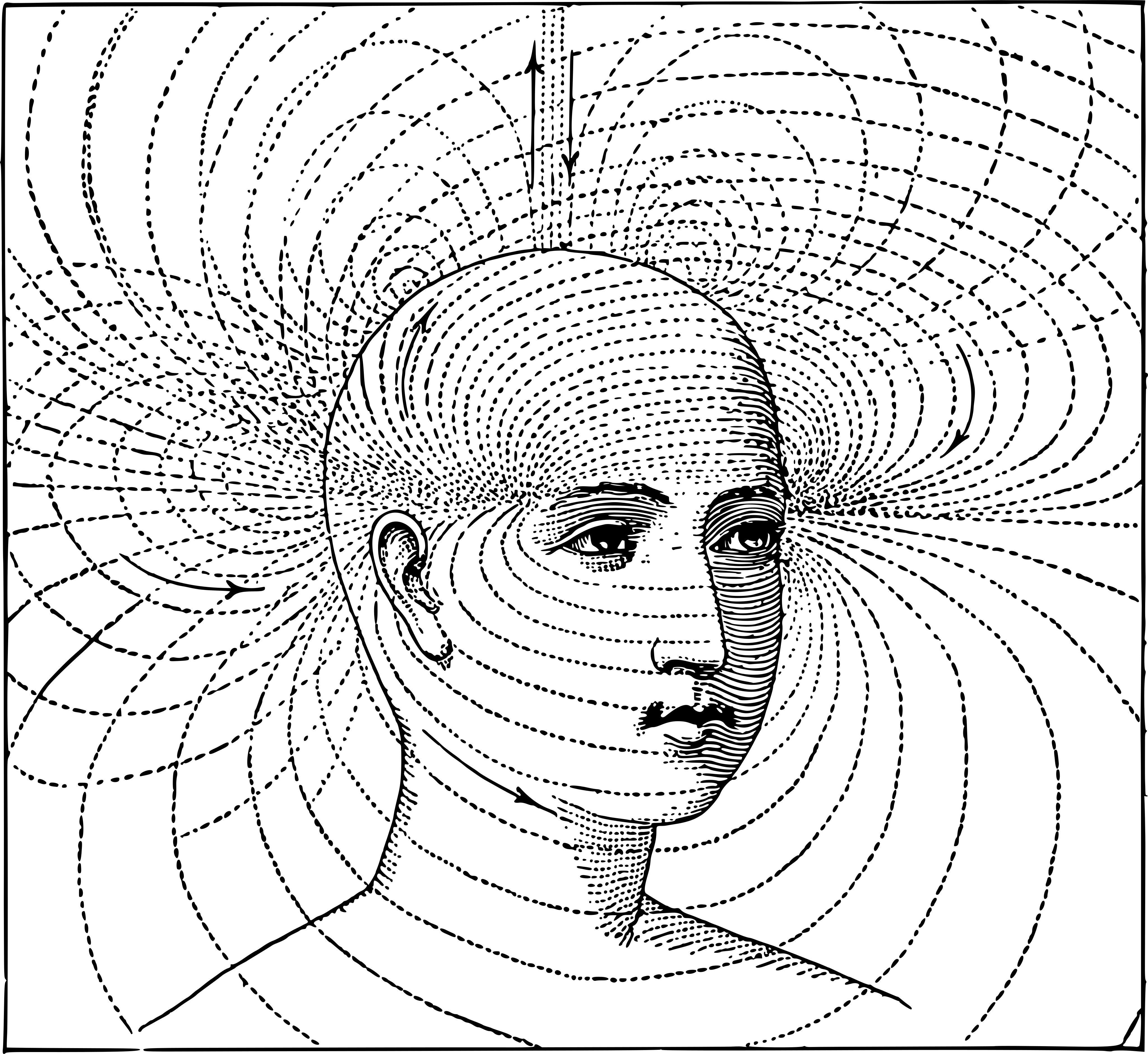
If you feel constantly tense, overwhelmed, anxious, exhausted, or stuck in pain despite doing "all the right things," your nervous system may be playing a larger role than you realize.
Nervous system regulation is a term that is deservingly getting more attention lately. This is an essential component of healing, whether dealing with an acute (new) or chronic (older and more stubborn) injury or pain condition.
Symptoms of nervous system imbalance may include muscle tension, headaches, digestive issues, poor sleep, fatigue, irritability, difficulty concentrating, heightened pain sensitivity, and feeling "on edge." These symptoms do not necessarily mean there is damage to the nervous system. Rather, they can indicate that the system has become overloaded or stuck in a protective state.
The nervous system is the command center of the body, facilitating signaling and communication between the brain and everything else. Its goal is to keep the body functioning in a harmonious, safe state in order to thrive.
Dealing with stress is normal and necessary for healthy function and even growth. But when that stress becomes prolonged or overbearing, it can cause imbalance in the system and affect us negatively.
How Does Stress Affect Our Health?
I once had a teacher who would say that stress can act like an amplifier for anything bad in the body. Pain, autoimmune disease, digestive issues, neurological conditions, etc. are all heavily influenced by chronic stress.
Numerous studies have demonstrated the negative effects of chronic stress on different aspects of health. For example, a 2020 study in the journal “Neuroscience” demonstrated that chronic stress can be associated with demyelination (deterioration of part of nerve cells) in the central nervous system, leading to functional neurological issues.
Major health institutions such as Harvard Medical School and the Mayo Clinic have published articles describing the negative effects of chronic stress on our health.
We live in a world/society that seems to be keeping us in a state of chronic stress. In addition to the typical stresses of life, we have constant news access and social media consistently bombarding us with negativity and altering brain chemistry for the worse. Whether we realize it or not, our brains are often in a “fight or flight” state of physiology.
This causes the nervous system to stay in a survival mode, which is different from the “rest and digest” physiology that is more conducive to healing and repair. When in survival mode, the brain prioritizes differently. This is normal and healthy, but becomes problematic when it continues over the longterm.
This “fight or flight” system, known as the sympathetic nervous system, is designed for short term use. If we perceive a threat, it’s designed to keep us safe and either avoid or overcome the threat with action. But after the threat has passed, we should shift back to the baseline parasympathetic “rest and digest” physiology.
Stress and Pain
Chronic stress can contribute to central sensitization and chronic pain. When addressing pain conditions, this is an often overlooked aspect. Pain is a protective mechanism in which your nervous system is trying to keep you safe and prevent physical damage. It is a natural, healthy, and necessary process.
Sometimes the pain process goes beyond what is necessary and the brain misinterprets normal information as abnormal and potential danger, driving the process even more. The nervous system becomes conditioned to stay in this hyper-vigilant state and becomes even more sensitive. Think of an alarm with an overly sensitive trigger that activates when it doesn’t need to.
Because stress causes the nervous system to function in this defensive, survival state, it can further emphasize the oversensitivity of the pain process and cause tension in muscle and fascia. For a more comprehensive understanding of what pain is and how to address it, here’s a two-part article that goes more in depth on the topic.
So How Do We Regulate Our Nervous System?
The best option, if possible, is to remove the source of chronic stress. This can be challenging and some situations may not be able to be changed. This is where the appropriate tools come into play. When you can’t control your external environment, focus on controlling your internal environment.
The good news is that is a multitude of tools and techniques are available, many of which are simple and easily accessible.
Here are four simple ways to help you regulate your nervous system.
1. Social Media Fast
Social media can be a major source of stress for individuals. And even if not the actual source, it can amplify it in a huge way.
Studies have shown that as little as a 72 hour “digital detox” can improve nervous system function. 72 hours to one week can reduce symptoms of anxiety, depression, and insomnia.
According to Stanford psychiatrist Anna Lembke, even though a one day fast is helpful, a minimum of one month is best for overcoming the addictive effects of social media and ensuring the best overall results.
While we may have no control over life events or situations, this is something we do have control over and can make a significant difference. Try starting with one day and increase from there.
2. Breathwork
Arguably the most versatile and accessible tool is breath work. The beauty of breath work is that it can be done anywhere, any time. There is a wide range of styles and approaches to choose from based on your needs - some are subtle and some are complex and intense.
A simple but powerful example is to simply slow your exhale.
Try this - sit up straight or lay down in a comfortable position. Mindfully inhale through the nose for a four count. Then exhale for a six to eight count. These numbers can be adjusted depending on your breathing capacity and comfort level. The most important thing is that the exhale is longer than the inhale.
Do this in a relaxed way. Don’t force the breath, just let it flow. As you do this, you’ll often notice fairly quickly that you feel more relaxed. It’s helpful to breathe through the nose most of the time, especially when inhaling.
While breathing in this way, it’s even better to engage the diaphragm by breathing more through the abdomen. As you inhale, the abdomen and rib cage should expand outward like blowing up a balloon, and as you exhale, everything will contract, like the balloon deflating.
Again, this is a basic technique that will only take a few minutes and can have a tremendous impact.
The book “Breath” by James Nestor is a helpful and fascinating resource to learn more about the physiology of breathing and the many different types of breath work available.
Proper breathing mechanics can also help with musculoskeletal pain issues on a mechanical level. Breathing is a basic movement pattern and the diaphragm, the main breathing muscle, is part of the core. Imbalances in this pattern can lead to or contribute to myofascial tension patterns.
3. Mindfulness Practices
Mindfulness practices help to condition the nervous system to be present and objective, which helps to break fear cycles. Like breath work, there are many options and techniques that fall under mindfulness practice. In fact, lots of breathing exercises can be considered mindfulness practices.
Mindfulness is also something that can be done anywhere and any time. The practices are simple yet impactful, especially when done consistently over time.
Other mindfulness practices include body scans and mindful walking.
4. Acupuncture
Acupuncture is an effective system that’s been practiced for thousands of years. Physiologically, it works on multiple levels. One of the main benefits of acupuncture, among many, is regulating the nervous system.
It does this by influencing the brain, activating the vagus nerve and parasympathetic nervous system, and improving microcirculation. It also can be used to release tension from muscles and fascia.
Acupuncture also stimulates the release of biochemicals that help control pain, induce healing, and modulate brain function. It is a powerful and versatile system and a valuable tool for addressing pain and stress.
In my practice, acupuncture is often combined with myofascial therapy, movement strategies, and chiropractic care to help reduce physical tension and improve nervous system function from multiple angles.
5. Movement
Walking, strength training, martial arts, yoga, dancing, mobility exercises, and other forms of movement can help regulate the nervous system by improving circulation, reducing stress hormones, and providing the brain with positive sensory input.
It is well established among health institutions including the CDC, Harvard, and the Mayo Clinic that movement has a tremendous beneficial impact on brain health and stress reduction.
Somatic Therapy is a holistic system that addresses stress and other mental health issues through body-centered movement therapies.
When stressed, movement can help to keep you grounded and create a sense of being in your body instead of being in your head. This is something everyone can apply in some form. Try different types of dynamic movement and create a routine with what resonates with you.
In Conclusion
Nervous system regulation is an essential part of the healing process. Because the nervous system is the command center of the body, it’s important to do whatever we can to keep it functioning in the most balanced and healthy way.
While there may be things that are out of our control in the outer world, there is always something we can do to influence our inner world. When we control what we can control, we can better manage what we cannot control.
In addition to the above suggestions, you can find more simple fast-acting techniques you can use to calm the nervous system in this free guide.
If you're struggling with persistent pain, stress, tension, headaches, or other symptoms that may be related to nervous system dysregulation, I can help. At Berkshire Functional Chiropractic & Acupuncture, I combine myofascial therapy, acupuncture, chiropractic care, and movement-based strategies to help restore balance and improve function naturally. Schedule an appointment here.
Berkshire Functional Chiropractic & Acupuncture
FREE RESOURCES
info@berkshirefunctional.com
(413) 274-7161
© 2024. All rights reserved.